
SCROLL TO READ
<WANDER>
TYDE AGENCY
FRIDAY 06, FEBRUARY 2026
Contemporary Art at CAAC, Seville
<WRITER> Marc Baker
<PHOTOGRAPHY> Marc Baker
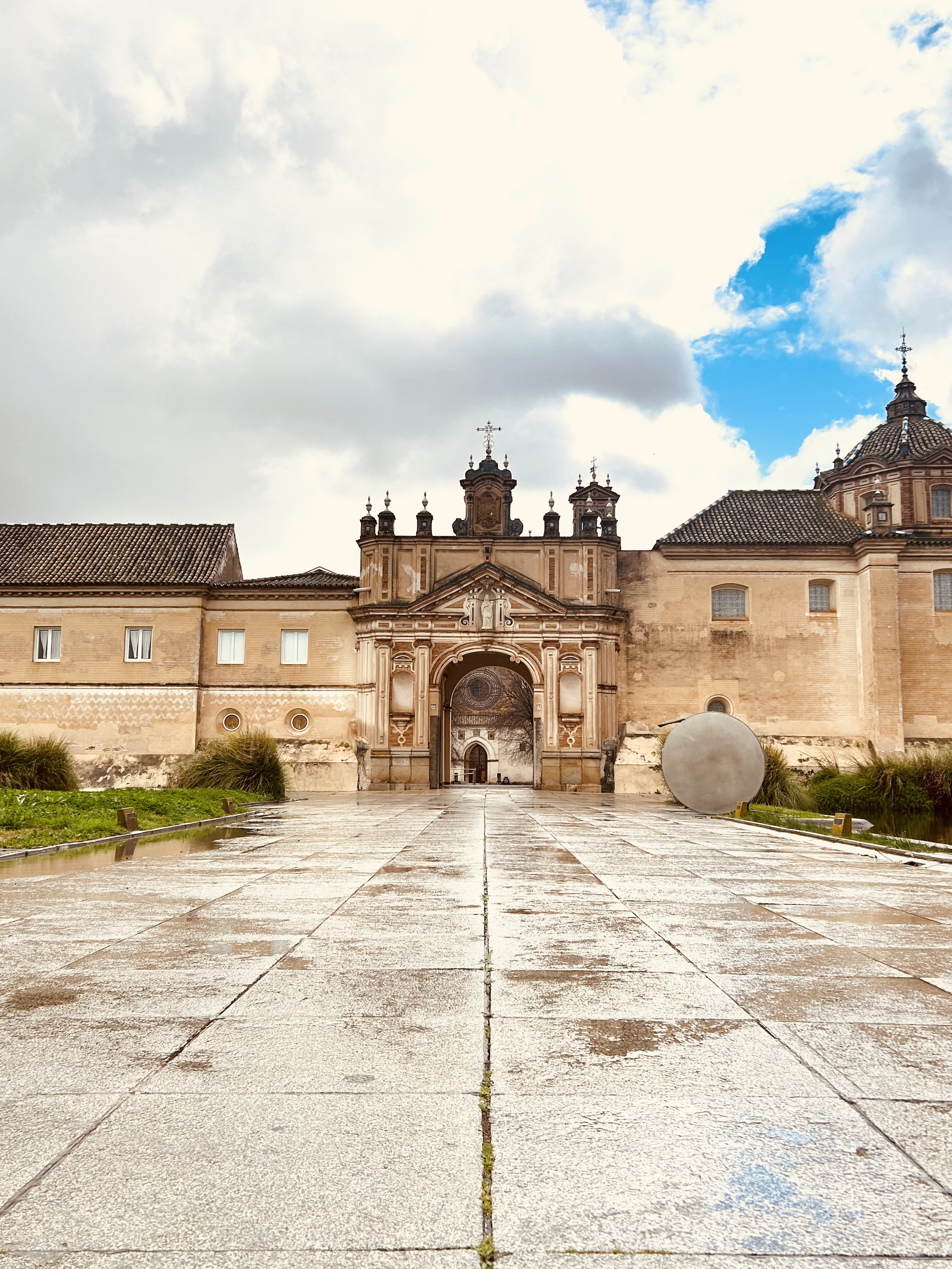
Seville in late January offers something rare — sunshine that warms without scorching, streets that invite wandering without urgency. Heading West from the Setas de Sevilla sculpture, that vast mushroom-like structure rising improbably above the old town, I took the short twenty minute walk across the Guadalquivir to the Centro Andaluz de Arte Contemporáneo.
The CAAC doesn't announce itself loudly. You find it tucked within the former Monastery of Santa María de las Cuevas, a building that has been a monastery, ceramics factory, and now — since 1998 — a vessel for contemporary thought.
<01>
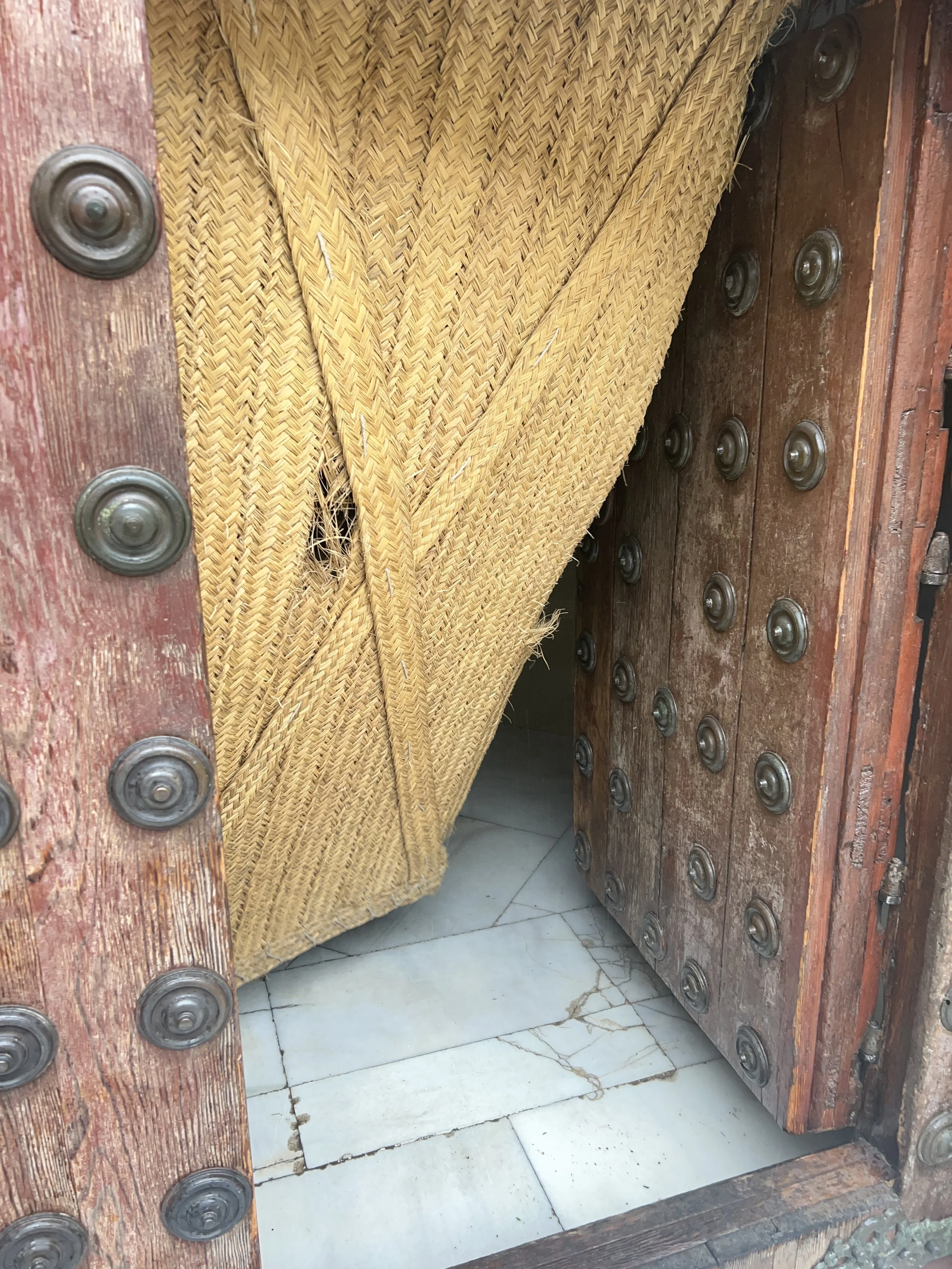
Entry comes via a narrow doorway, barely noticeable in the weathered monastery wall. A woven curtain hangs there, creating a tactile barrier between the outside world and what lies beyond. Push through and you are greeted by vast domed ceilings, centuries-old stone, and a space built for contemplation.
This is the tension that defines the CAAC — modern art colliding with traditional architecture at every turn.
It's not gentle juxtaposition. It's confrontation. And it works.
<02>
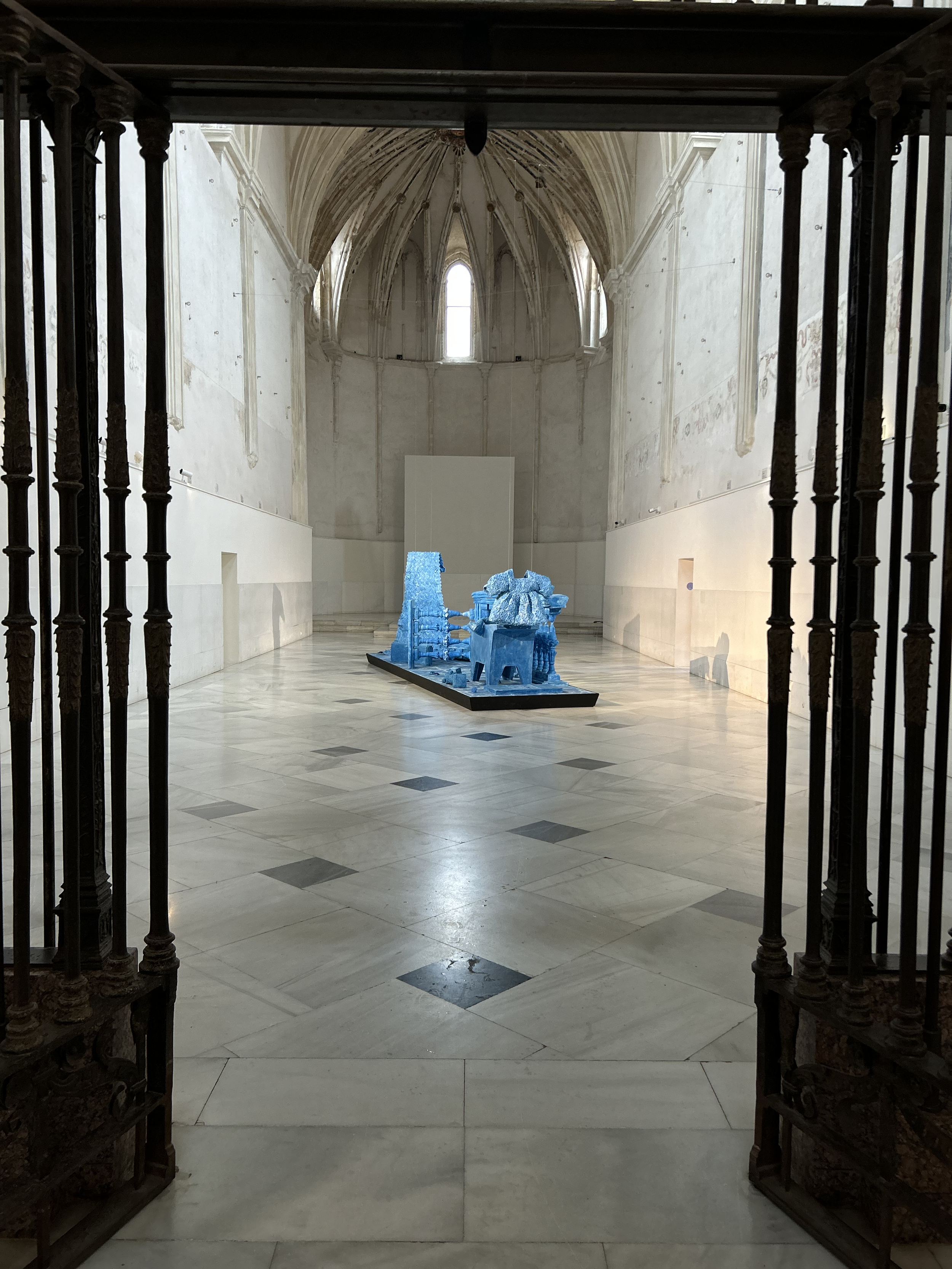
SANDRA POULSON: WHERE THE DUST BREATHES
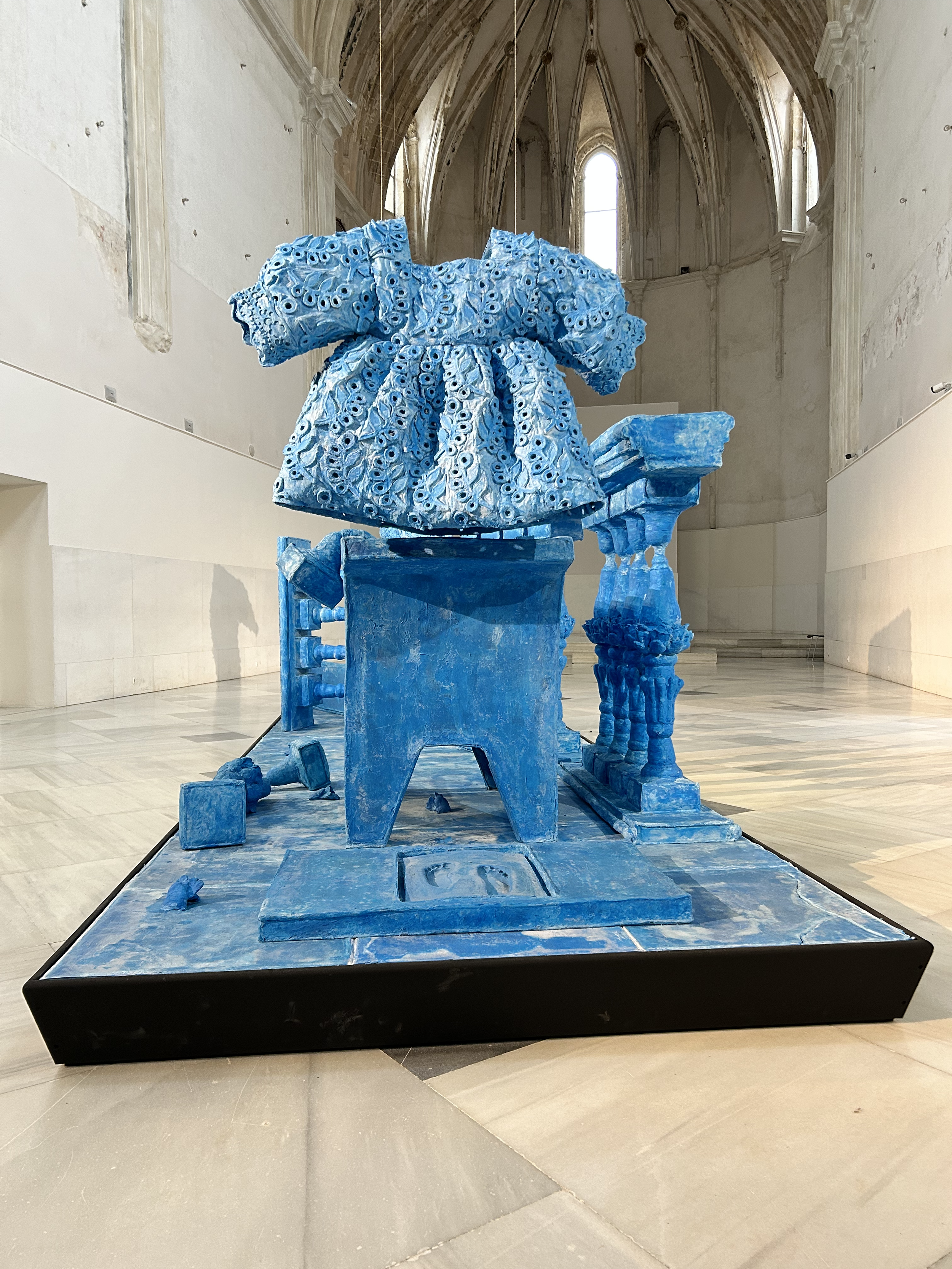
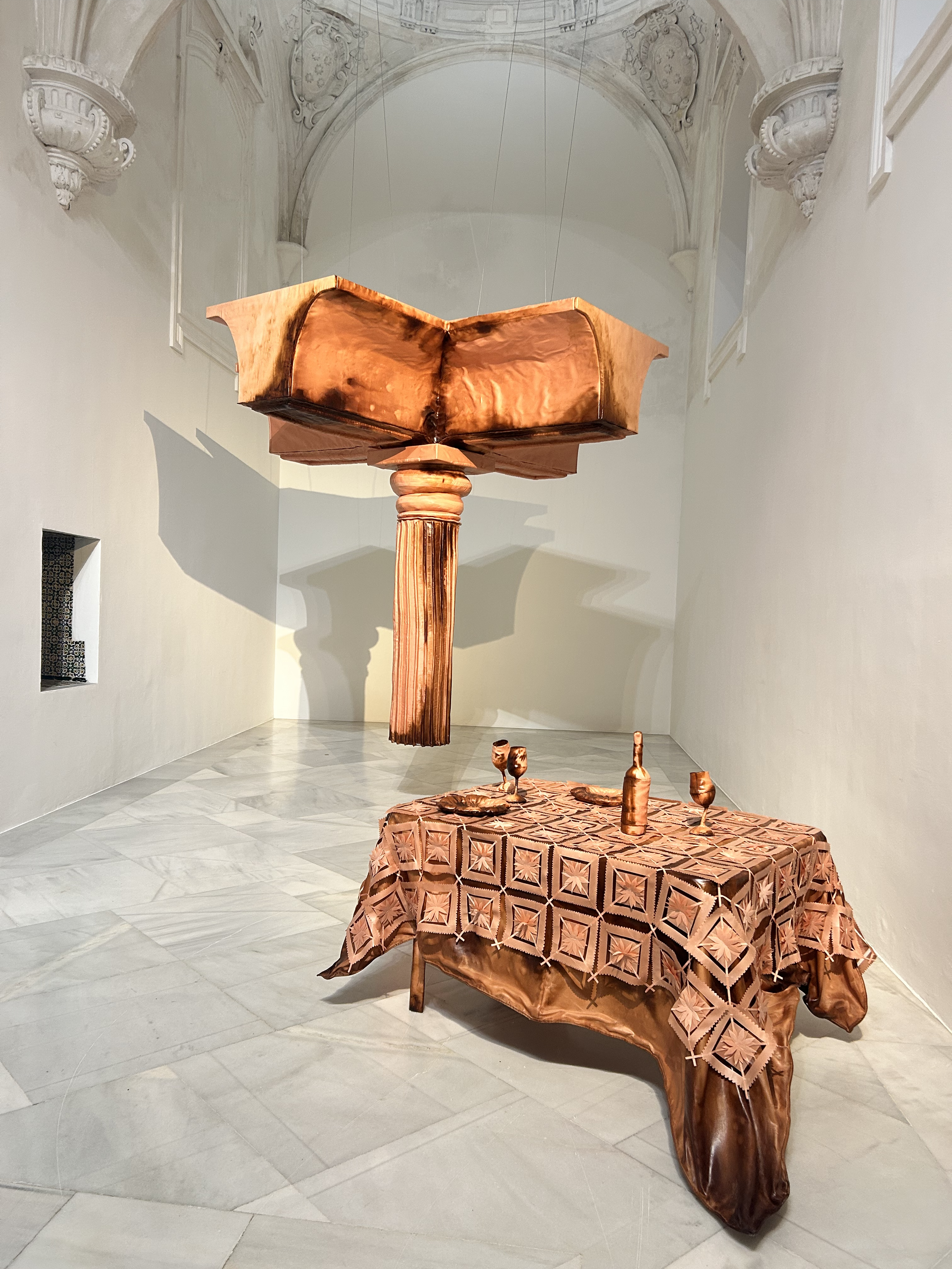
Occupying the monastery's most sacred space, Poulson features objects from everyday life made of fabric, each cut with patterns, sewn, and stuffed with textile waste from landfills. Blue Soap and Water features five sculptural forms. A washing basin. A balustrade. A traditional dress. A pano da costa. Moulds of human footprints. Each object soft-edged, erased, smoothed by this coating of cleansing agent. The wall text explains: Poulson's great-grandmother washed clothes for Portuguese families during the colonial era. The blue soap — a Portuguese product — became common in her native Angola, a key element in domestic labour but also a legacy of colonial presence, even used for camouflage in the illegal diamond trade.
<03>
MIGUEL BENLLOCH: DESCENDING
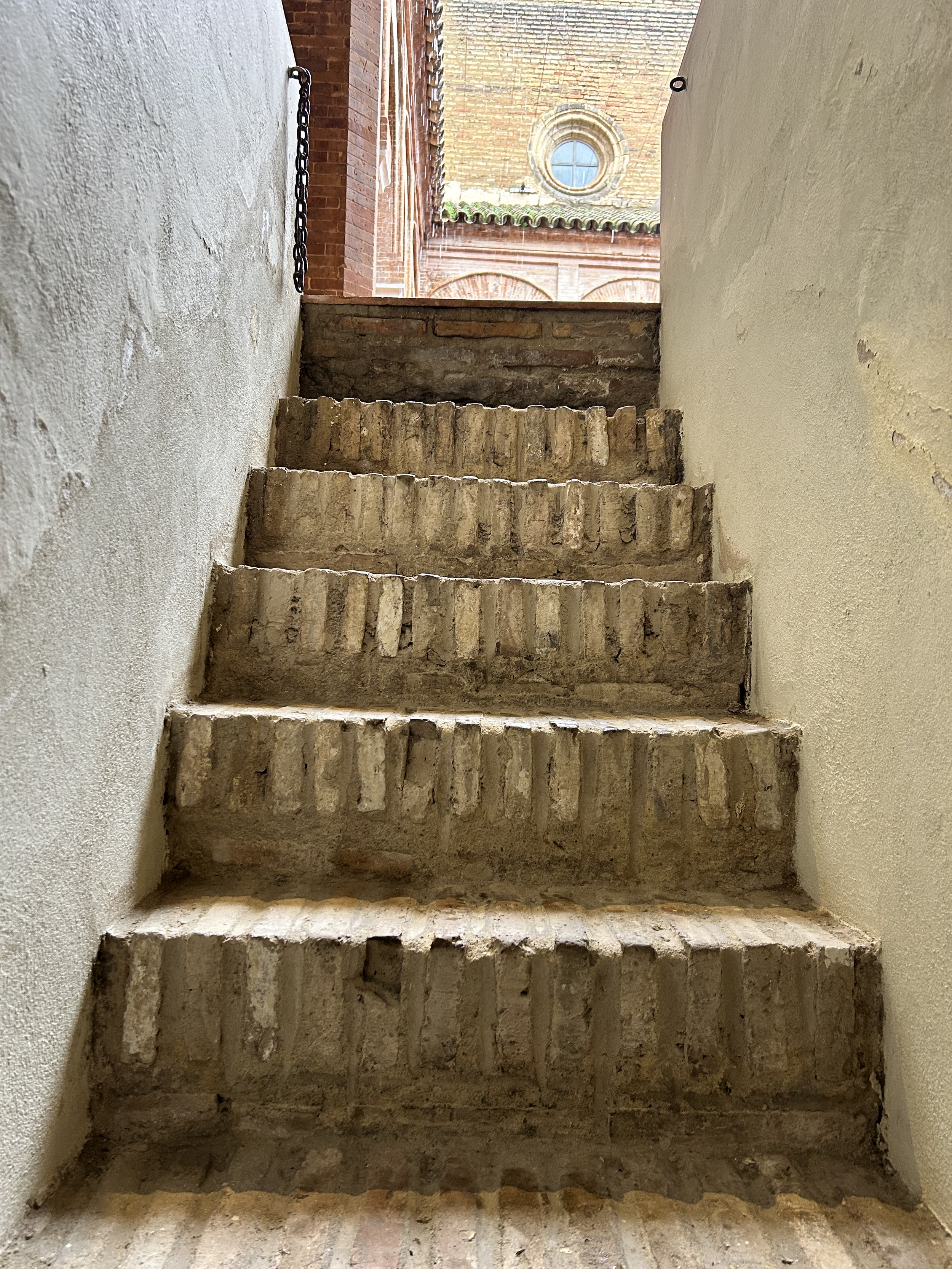
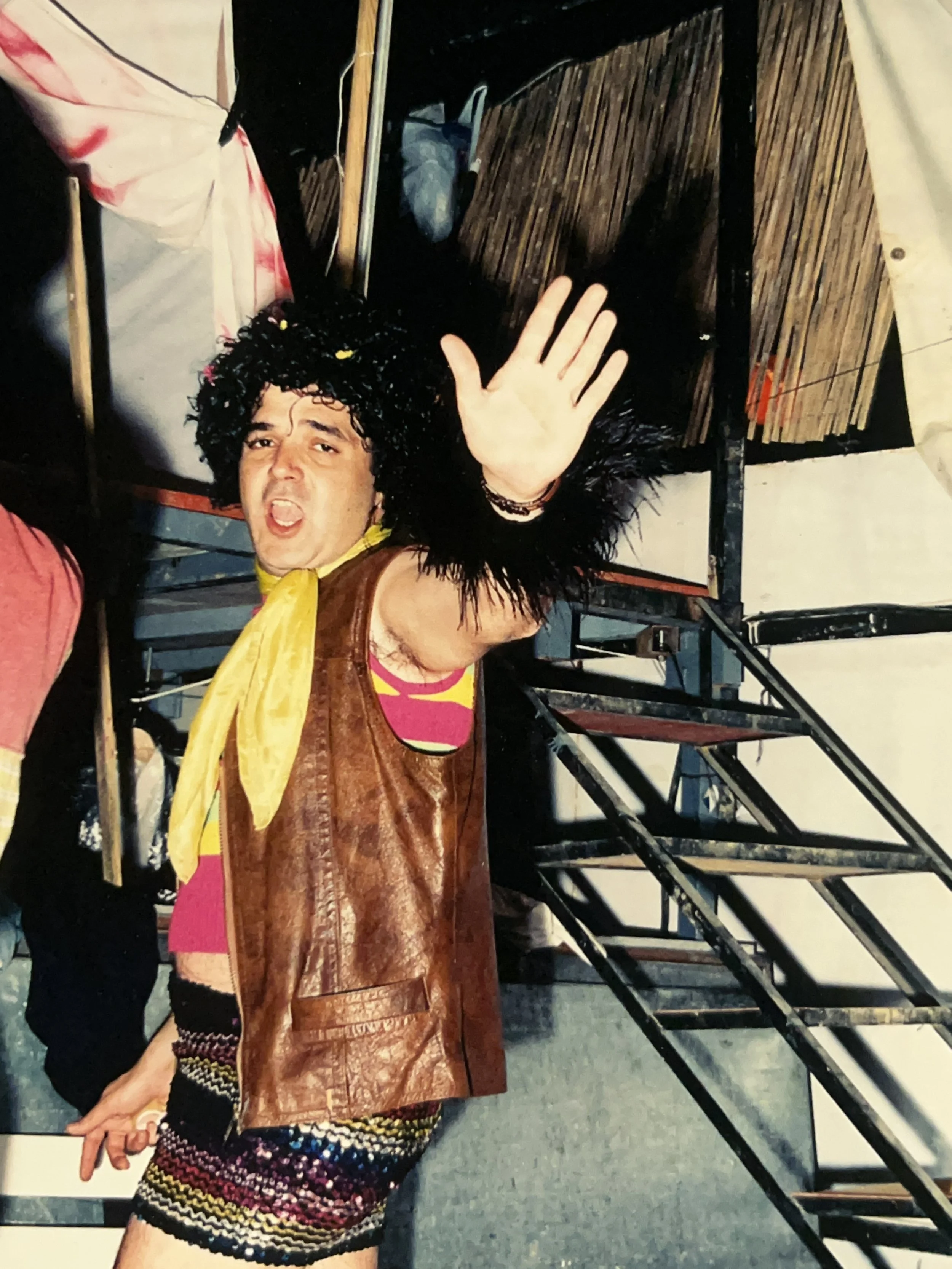
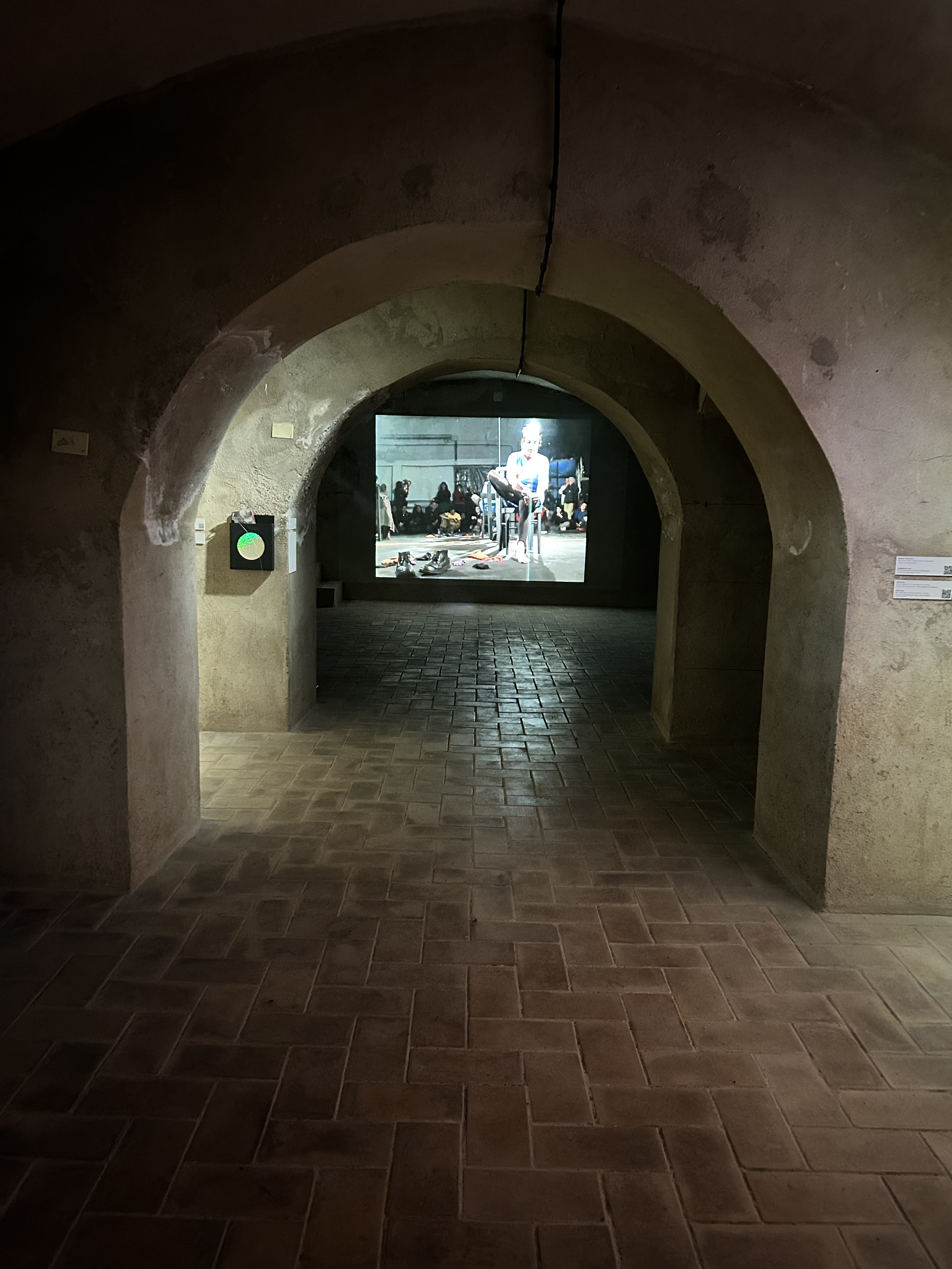
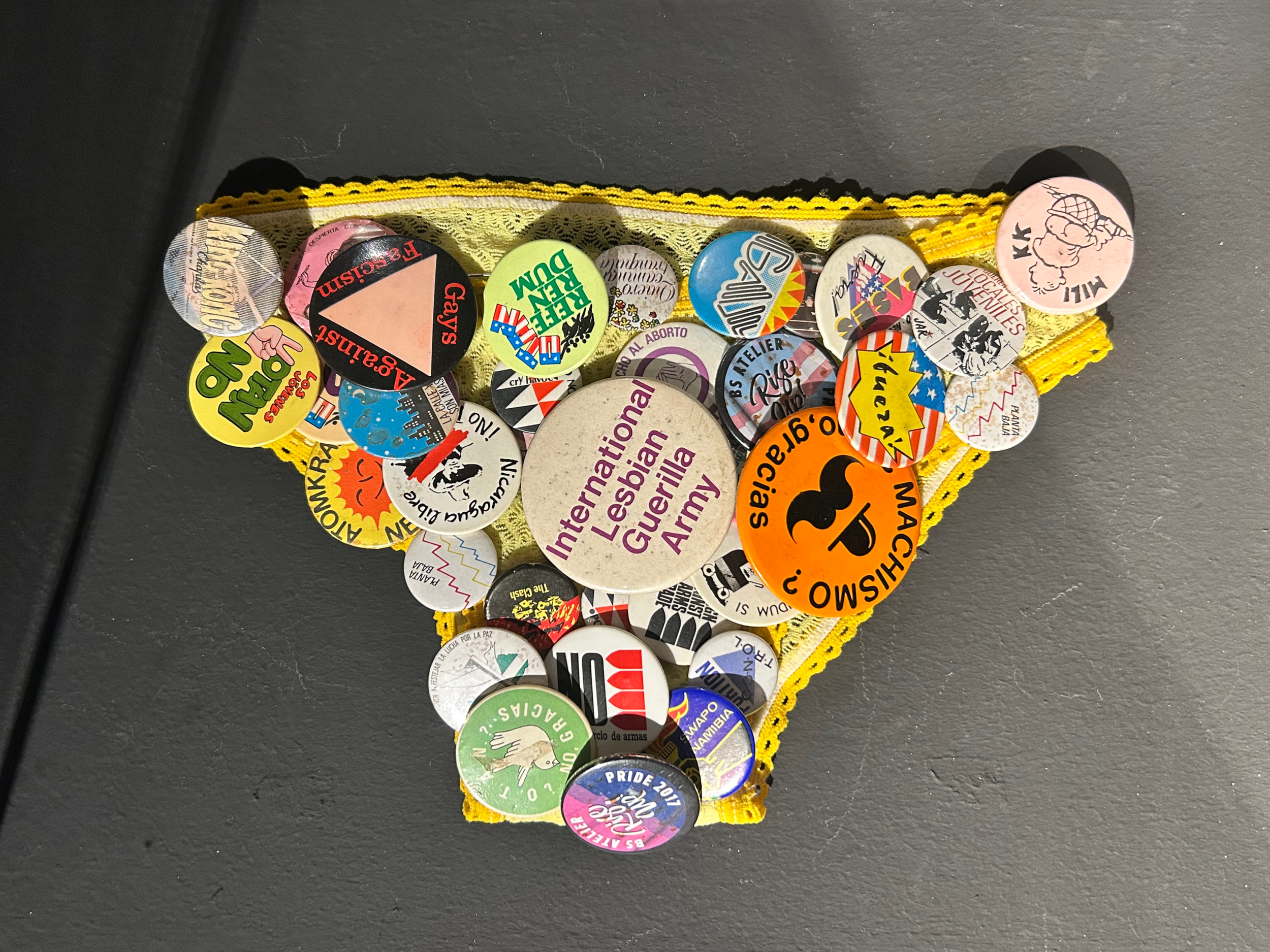
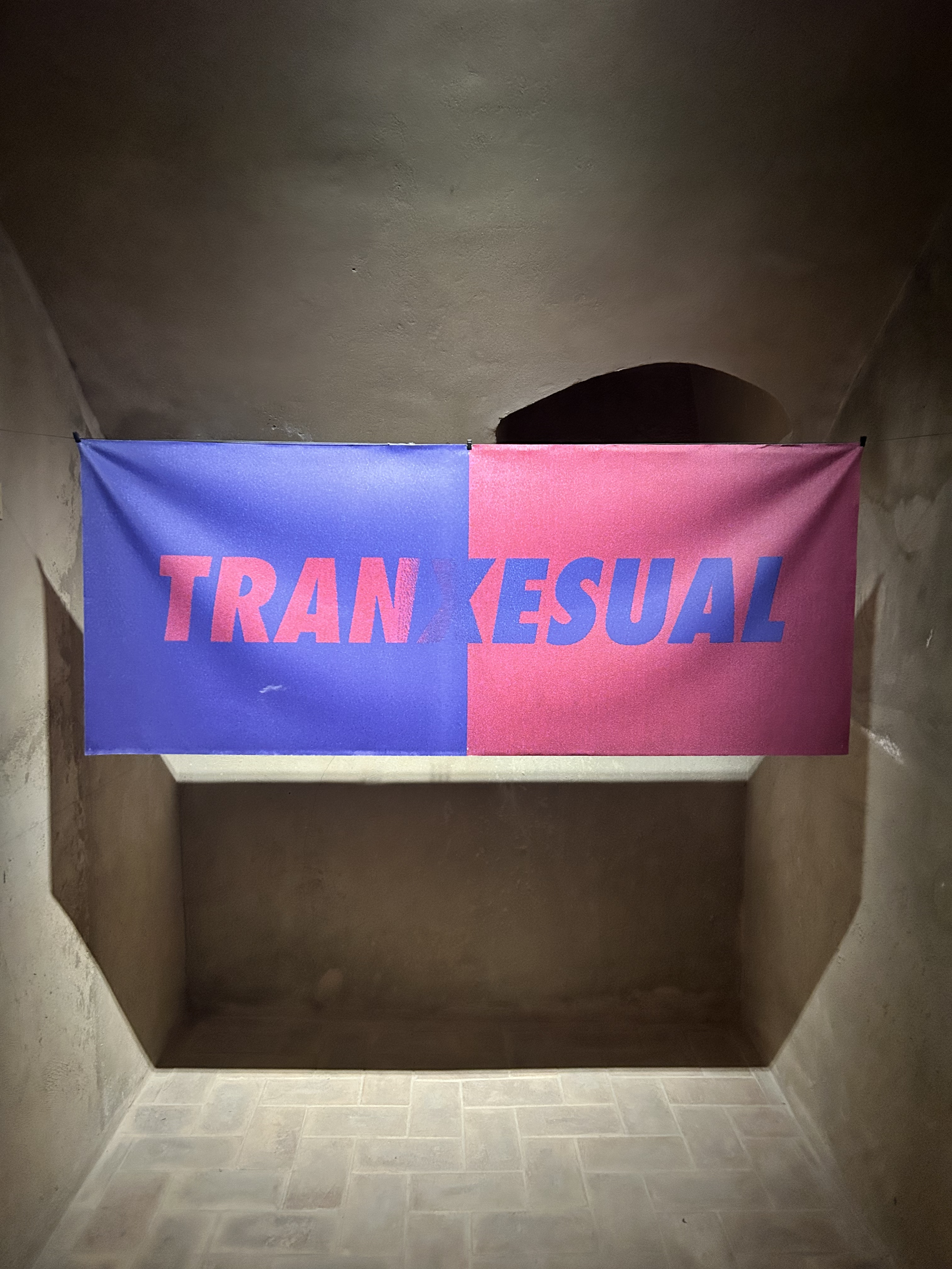
To reach Miguel Benlloch's exhibition Bajar La Voz, you descend down narrow worn brick steps. Once at the bottom, low ceilings and a series of dimly lit, recessed 'chambers' individually frame Benlloch's collection of recorded performative art, photographs, textiles, and videography that are presented on small screen tv sets placed on the floor. Artist, poet, activist, and troublemaker, Benlloch founded gay liberation movements, championed AIDS activism, and promoted counter-cultural spaces when institutional arts settled into comfortable neutrality. A film projection at the far end of the space shows him performing different identities. Not costume play, but examining how bodies are read, how identities are assigned, and how performance is always already political.
<04>
EL ETERNO PRESENTE
Approaching technology not functionally but instead phenomenologically. These aren't displays. They're investigations into how we experience presence, how duration stretches or compresses, how the mechanical can generate the mystical.
The experience leaves you both stimulated and strangely calmed. Overfull and emptied out.
CACHITO VALLÉS: THE ETERNAL PRESENT
Then comes something entirely other.
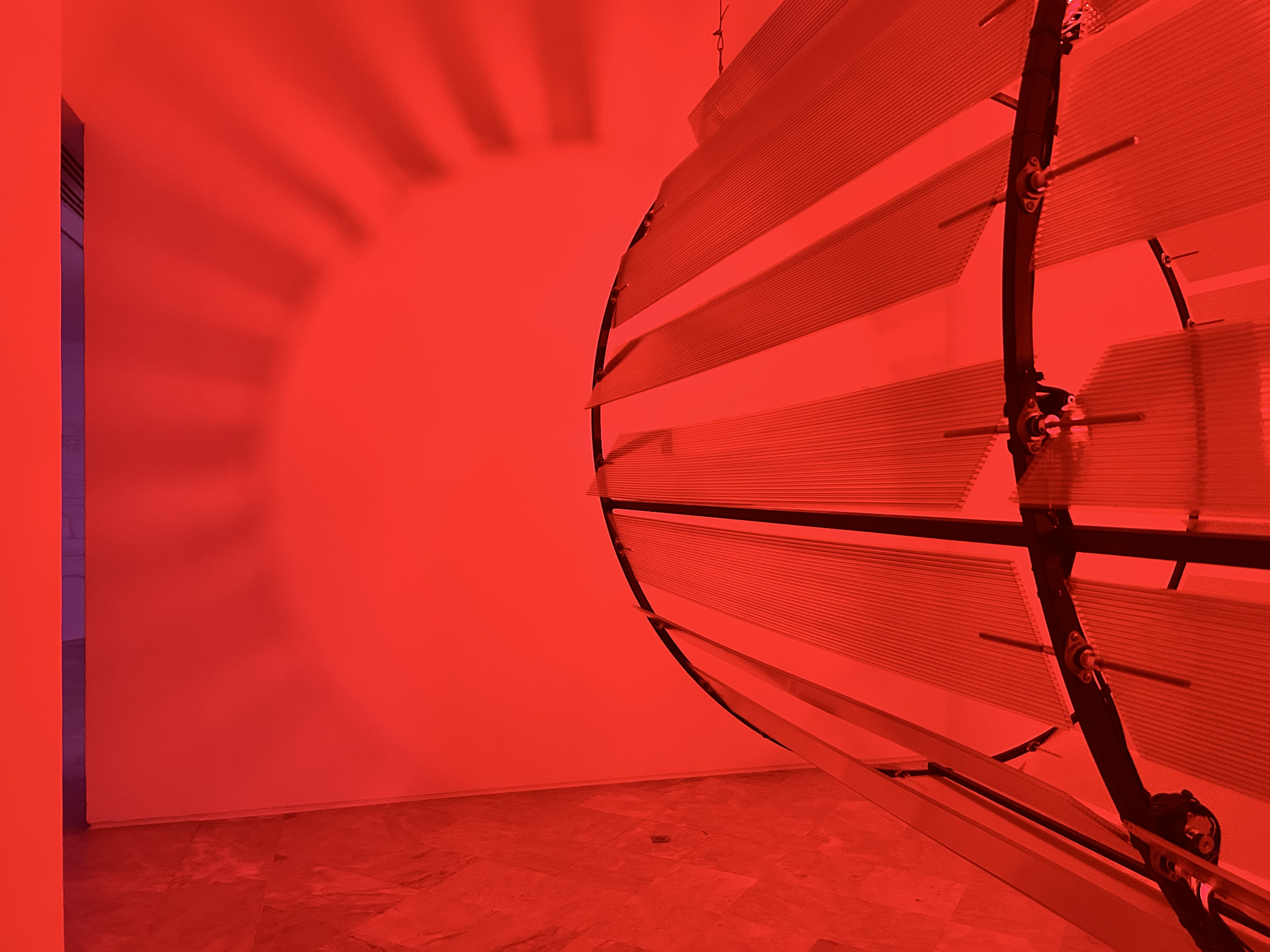
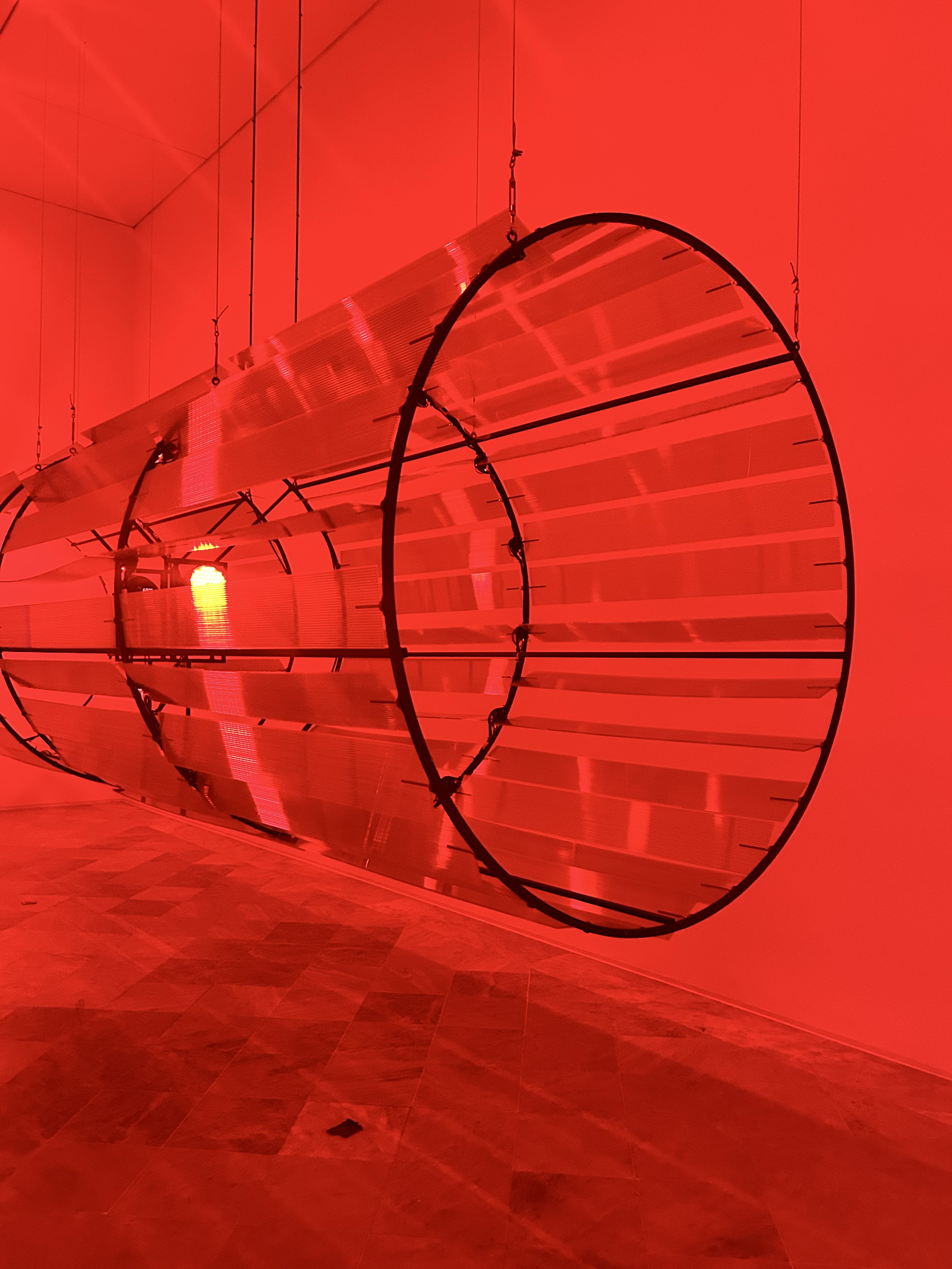
Cachito Vallés exhibition El Eterno Presente inhabits the old kilns, remnants of the monastery's industrial chapter. What strikes you isn't the work itself at first. It's the sensory recalibration.
I'd seen Olafur Eliasson's The Weather Project at Tate Modern back in 2012 — that vast, orange sun suspended in the Turbine Hall, people lying on their backs beneath it as though worshipping. This is reminiscent.
Pure red. Overwhelming, all-consuming red. A curved mirror installation catches and multiplies the crimson light, creating infinite recession. The geometry is precise — circular, reflective, architectural — but your perception bends under the saturation. Impossible to photograph accurately, impossible not to try.
The experience leaves you both stimulated and strangely calmed. Overfull and emptied out.
<05>
Thankfully, the CAAC saves something tender for last.
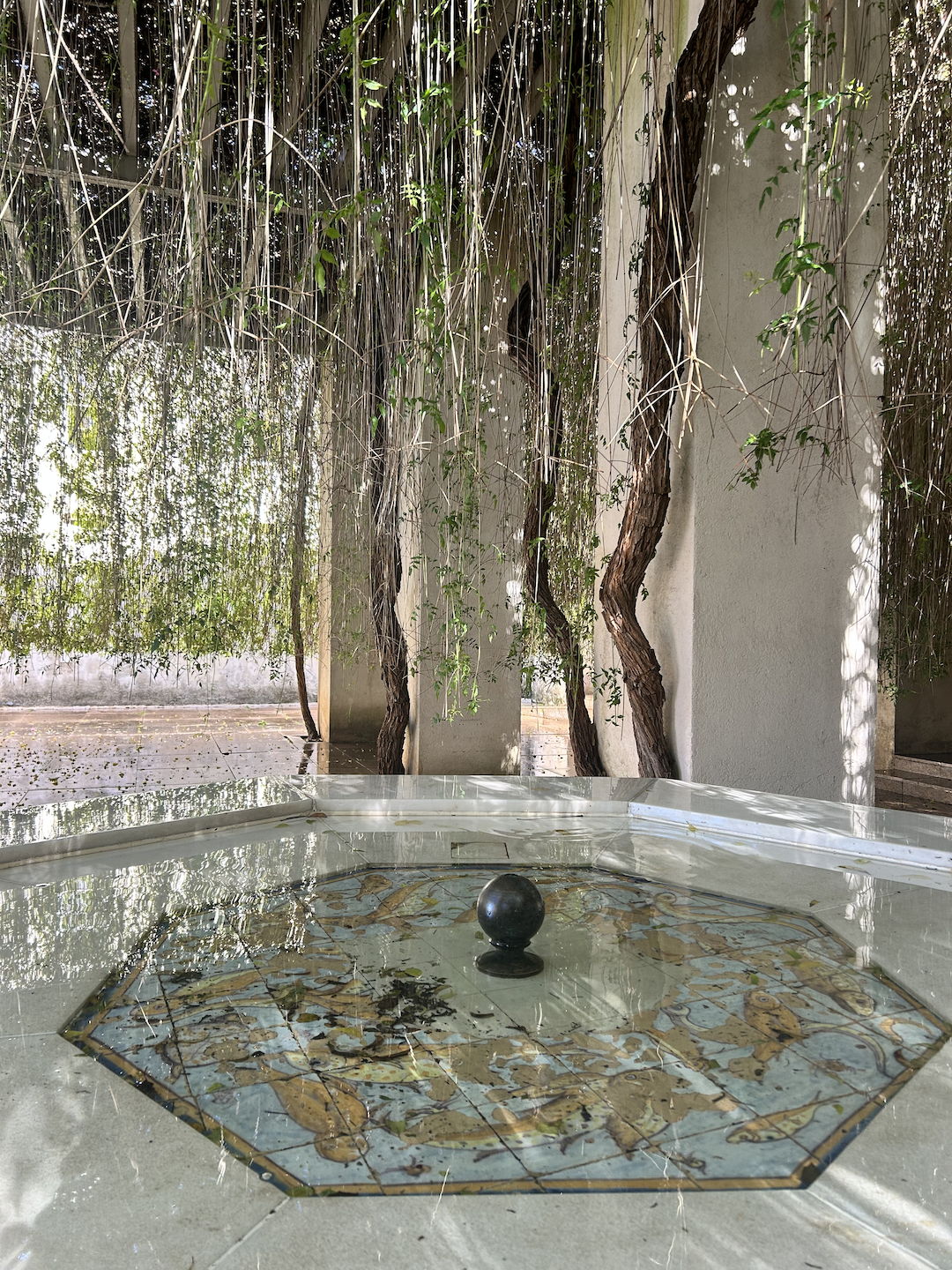
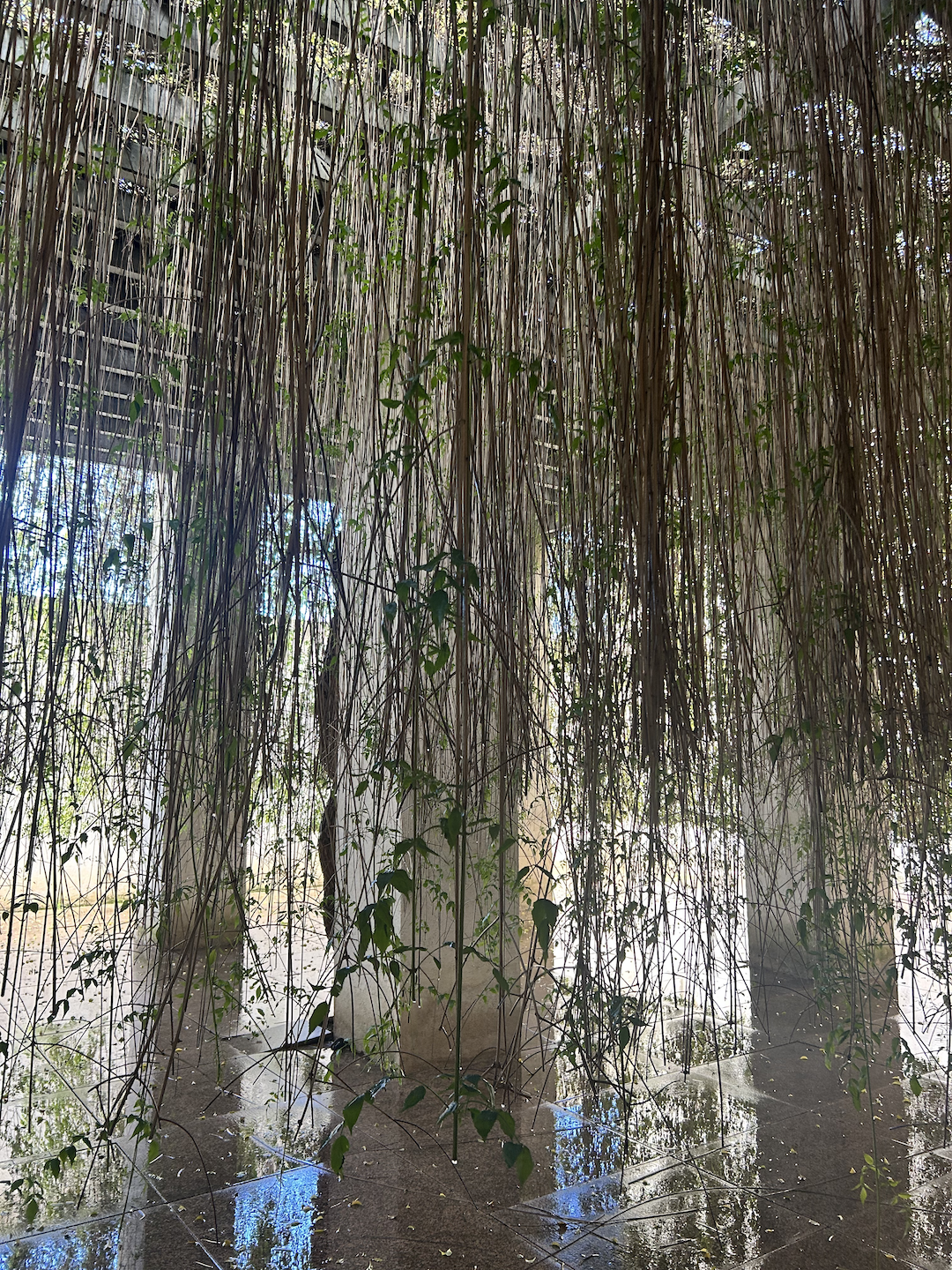
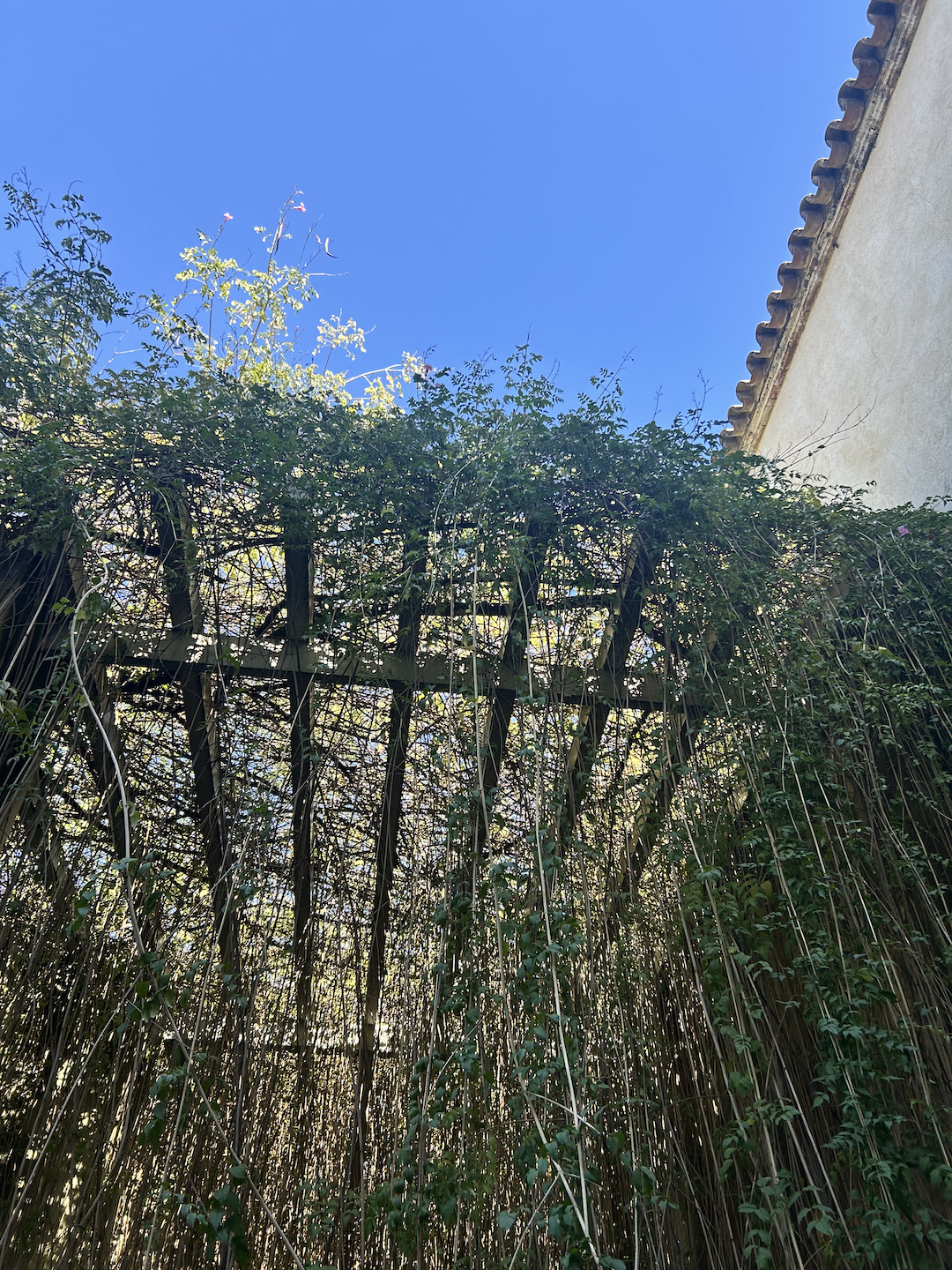
Between the intensity of Vallés and the underground confrontation of Benlloch, a courtyard space features an arbor covered in twisted, supple pink trumpet vine (Podranea ricasoliana) branches that hang low and screen out everything beyond its small geometry of peace. Light plays through them in shifting patterns. In the centre: a hexagonal fountain.
After more than two hours moving through contemporary interrogations of colonial history, immersive experiences, and political resistance, this space offers the spatial equivalent of a palette cleanser. The perfect way to end my time at the CAAC, before heading back across the river for a spot of tapas in the late January sun.
<01> Centro Andaluz de Arte Contemporáneo exterior and entrance
<02> SANDRA POULSON: WHERE THE DUST SETTLES
<03> CACHITO VALLÉS: THE ETERNAL PRESENT
<04> MIGUEL BENLLOCH: DESCENDING
<05> Centro Andaluz de Arte Contemporáneo pink trumpet vine covered arbor
Contact
Say hello:
General Enquiries & New Business: hello@tyde.agency

EXPRESSING ARTISTRY OF ALL KINDS.